Bedding & Materials
Organic Cotton Sheets: What Certifications and Weaves Can Tell You
A sheet’s softness is only the beginning of its story. Understanding what a certification covers—and how a weave changes the way cotton feels, hangs and wears—can help you choose bedding with confidence, beyond the familiar shorthand of “organic” and thread count.
The quiet luxury of a well-made bed often comes down to details that are easy to overlook: the origin of the fiber, the standards applied during production, the way threads cross, and whether the care routine suits real life. Organic cotton sheets bring all of these considerations together. Their label may suggest a particular approach to farming, but the finished fabric also has a distinct construction, hand feel and maintenance profile.
That is why shopping by a single claim rarely tells the whole story. “Organic” does not automatically describe every step between field and finished sheet. “Sateen” identifies a weave, not a fiber-growing method. And a high thread count, on its own, is not a reliable verdict on comfort or quality. Read the label as a set of clues: each one answers a different question.
Start with what “organic” does—and does not—mean
Cotton is a natural fiber, but the word “cotton” alone says little about how it was cultivated or processed. Organic agricultural standards generally set rules for how crops are grown, including restrictions on certain synthetic inputs. The precise requirements depend on the standard and the jurisdiction. A finished sheet’s organic claim, however, may refer to the fiber, the finished textile, or a particular portion of its materials.
This distinction matters. A label describing organic cotton fiber is not necessarily evidence that every dye, finish, accessory or stage of manufacture has been assessed under the same standard. A certification can make a claim more legible by establishing a defined framework and independent verification, but it is still worth checking what the certification actually covers.
Look for the name of the certifying standard rather than relying only on broad phrases such as “natural,” “eco-conscious” or “chemical-free.” Those phrases can be imprecise, and they do not all carry the same meaning. A useful label gives you something concrete to investigate: the standard, the scope of certification, and—where available—the certificate or certification body.
What GOTS certification can indicate
The Global Organic Textile Standard, commonly known as GOTS, is a textile standard that addresses organic fibers alongside defined environmental and social criteria across processing and manufacturing. Its scope is broader than a simple statement about how cotton was grown. That makes the exact wording and certification status important: a product description may refer to certified organic fiber, a certified textile, or a facility’s role in a certified supply chain.
Certification is not a guarantee that a sheet will feel softer, last longer or suit every sleeper. Nor does it mean every possible chemical or environmental impact has been eliminated. Instead, a standard offers a documented set of requirements and a means of verification. The practical value is clarity: shoppers can distinguish a specific, independently assessed claim from a general impression created by marketing language.
When a seller says that sheets are GOTS certified, read the wording carefully and, if the detail matters to you, look for certification information that identifies the product or the responsible business. Standards can have different levels and scopes; a logo without context may not answer every question. The goal is not to turn a bedlinen purchase into an audit. It is simply to know what assurance the label is offering.
Certification and textile feel are separate questions
A certification tells you about standards and accountability; the weave helps explain the hand feel. Two sheets made from certified organic cotton can feel strikingly different if one is woven as percale and the other as sateen. They may differ in surface texture, drape, weight and the way they respond to washing. Certification does not prescribe one ideal finish, and a particular weave does not establish that cotton was organically grown.
That separation is useful because it prevents one appealing quality from standing in for another. If you love the cool, crisp sensation of a freshly made hotel bed, focus on weave and fabric construction. If material sourcing is a priority, examine the certification claim. If easy laundering matters most, study the care instructions. A considered choice weighs these factors together rather than expecting a single label to answer everything.
Sateen: smoothness, drape and a soft sheen
Cotton sateen is made with a satin-style weave structure, commonly arranged so that more yarns pass over the surface than in a basic one-over-one construction. That arrangement gives sateen its characteristic smooth face and fluid drape. It can catch the light with a subtle sheen, lending the bed a polished, composed appearance without requiring an elaborate layer of decoration.
In the hand, sateen often feels softer and silkier than percale, particularly when new. Its surface may feel less crisp and more enveloping, while the fabric tends to fall in relaxed folds across the mattress. Some sleepers appreciate this sense of softness; others prefer the clean, dry touch of a crisper weave. Neither preference is more correct. The right texture is the one that feels comfortable through an entire night, not merely impressive when first unfolded.
Sateen is sometimes described as warmer than percale. That can be a useful general impression, but it is not a universal measure of temperature. Fiber quality, yarn size, fabric weight, room conditions, sleepwear and personal heat sensitivity all influence how bedding feels. A lightweight sateen may behave differently from a denser one. Consider the full fabric and your own sleep environment instead of treating the weave name as a climate guarantee.
Care is part of the equation, too. Follow the manufacturer’s instructions, especially when a sheet has a special finish or trim. Gentle washing, appropriate water temperature and prompt removal from the dryer can help preserve the fabric’s appearance. As with other cotton textiles, repeated laundering may alter the hand feel over time. The weave offers useful expectations, not immunity from everyday wear.
Percale and other cotton weaves
Percale is a plain weave, with a simple, balanced crossing of vertical and horizontal yarns. It is often associated with a crisp, matte surface and a light, airy sensation. For sleepers who like their sheets to feel cool and freshly pressed, percale can be an appealing counterpoint to sateen’s smoother, more fluid character. It may also become softer with laundering, depending on the yarn, finish and care routine.
Other cotton constructions can produce different results, and product descriptions do not always use terminology with equal precision. A “brushed” finish, for example, refers to a surface treatment that raises fibers to create a soft, slightly fuzzy feel; it does not identify a weave. A blend changes the fiber composition, while a finish may change the fabric’s surface or performance. These are separate design choices, so read descriptions for composition, construction and finishing rather than treating them as interchangeable.
For organic cotton sheets, the same principle applies: organic describes a standard relating to the fiber or textile, while percale and sateen describe construction. One is not a substitute for the other. A well-labelled sheet should make it possible to understand both what it is made from and how it is made.
Thread count: a number with limits
Thread count refers to the number of threads within a defined area of fabric, but it is not a complete measure of quality. The number can be influenced by yarn construction and counting methods, and a higher figure does not guarantee a softer, more breathable or longer-lasting sheet. Fiber quality, the thickness and structure of the yarn, weaving, finishing and workmanship all contribute to the final result.
A moderate thread count in a thoughtfully made cotton fabric may feel more appealing than a higher count achieved through a construction that is dense or heavy for your preference. Rather than pursuing the largest number on a label, consider whether the maker clearly states the fiber content and weave, provides practical care directions, and describes the fabric in terms that align with what you like to sleep on.
Thread count can still be one useful specification when comparing similar products, but it works best as context rather than a ranking system. It cannot establish organic status, certify a supply chain or tell you whether the fabric’s finish will suit sensitive skin. Keep the number in its proper place: informative, but not decisive.
How to read a sheet label with intention
A small sequence of questions can bring order to a crowded product page. First, identify the fiber content: is the sheet 100 percent cotton, or a blend? Next, look for the named certification and what it covers. Then check the weave, fabric weight if provided, and care instructions. Finally, confirm the dimensions and fitted-sheet pocket depth, especially if your mattress is unusually deep or sits on an adjustable base.
- Fiber: Check whether the fabric is cotton throughout or combined with another material.
- Certification: Look for a named standard and precise language about the certified material or product.
- Weave: Choose between the smoother drape of sateen and the crisper feel often associated with percale.
- Finish: Notice any softeners, treatments or decorative details described by the manufacturer.
- Care: Make sure the washing and drying routine is realistic for your household.
- Fit: Compare mattress dimensions and depth with the fitted-sheet measurements.
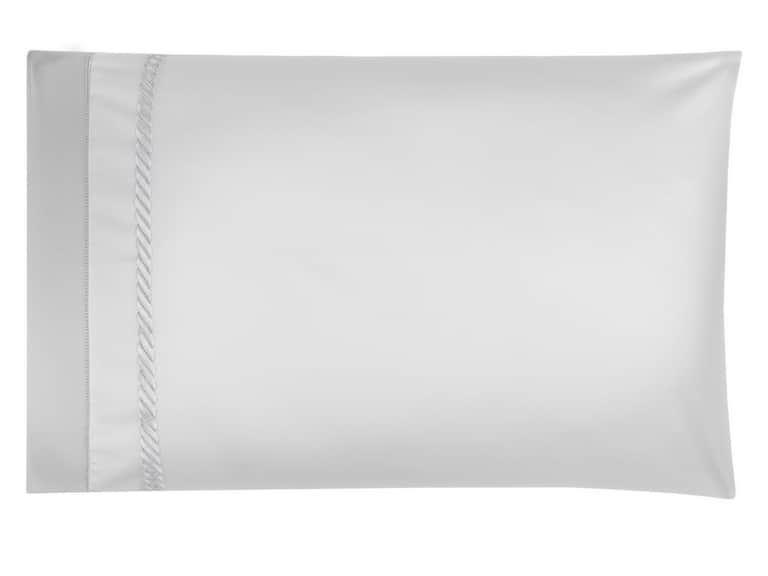
This checklist also helps separate a textile’s aesthetic from its performance. Embroidery, a contrast flange or a lustrous finish may give a bed a beautifully tailored look, but they do not establish organic certification. For instance, the Bovi Simone sateen pillowcases and shams are described as 500-thread-count cotton sateen with rope embroidery and a contrast flange. That description points to surface feel and styling; it should not be read as a claim that the cotton is organic.
Choose for the way you sleep
A sheet is in close contact with the body for hours, so personal comfort deserves more weight than abstract rankings. If you tend to feel warm, you might prefer a fabric that feels light and crisp, and you may want to consider the overall bedding layers and bedroom temperature. If you gravitate toward a smooth, relaxed surface, sateen’s drape may be more appealing. If you share a bed, remember that different sleepers can respond differently to the same fabric.
Skin sensitivity may also shape the decision, but no weave or certification can promise that a textile will suit every person. If you have known sensitivities, examine the full material and finish information, wash new bedding according to the care label before use, and consult a qualified clinician about persistent reactions. “Organic” is a meaningful sourcing claim when properly documented, but it is not a medical guarantee.
For a more grounded comparison, begin with what you already know. Do you prefer a freshly pressed, crisp pillowcase or a softer, more fluid one? Do you mind ironing, or is low-maintenance laundering essential? Does the room run warm? These everyday observations can narrow the field more reliably than a promise of hotel-like luxury, since “luxury” can refer to finish and styling rather than a particular feel.
Care, longevity and realistic expectations
Good care begins with the manufacturer’s instructions. Washing too aggressively, using unsuitable temperatures or over-drying can place needless strain on cotton fibers. Wash bedding regularly as appropriate for your household, avoid overcrowding the machine, and use a detergent suited to the fabric. If a sheet set includes embroidery or other detailing, take those features into account when choosing a wash cycle.
Natural fibers can crease, and the degree of wrinkling depends on the weave, finish and drying method. Sateen may have a smooth, graceful drape, but that does not mean it will remain perfectly pressed after sleep or laundering. Removing sheets promptly from the dryer and folding or making the bed while they are still slightly warm can help reduce pronounced creases. There is no need to mistake lived-in softness for poor quality.
Durability, too, is not promised by a certification or a thread-count figure alone. Construction, stitching, fit, frequency of use and washing all play a role. A fitted sheet that is stretched tightly over a mattress may wear differently from one with a more suitable pocket depth. Rotating between sets, when possible, gives each set time away from use and washing, but the most useful habit is simply following the care instructions and choosing bedding designed for the mattress.
A thoughtful way to make the decision
The best organic cotton sheets are not necessarily the ones with the most elaborate language or the highest number on the label. They are the ones whose material claims are clear, whose construction suits your preferred feel, and whose care requirements fit your routine. Certification can lend structure and accountability to sourcing claims. Weave can help you anticipate texture and drape. Neither needs to stand alone.
Think of the decision as two complementary readings. First, read the story of the textile: fiber, certification and processing claims. Then read its design: weave, weight, finish and care. A GOTS reference may help clarify a standard; “sateen” may suggest a smooth surface and a fluid fall. Together, those details build a more useful picture than “soft” or “premium” ever could.
There is elegance in knowing what you are bringing into the bedroom—not because every sheet needs a complicated backstory, but because considered details make everyday choices feel more personal. Organic cotton sheets can be an invitation to look beyond softness and thread count: toward how the fabric is made, what its label genuinely says, and whether its tactile character is the one you want to meet at the end of the day.
Frequently asked questions
Does GOTS certification mean a sheet is completely chemical-free?
No. GOTS sets defined requirements for organic fibers and textile processing, but “completely chemical-free” is an overbroad claim. Review the standard’s scope and the product’s specific certification information rather than interpreting certification as proof that no chemical substances were involved at any stage.
Are organic cotton sateen sheets warmer than percale?
Sateen is often described as having a smoother, more substantial feel, while percale is commonly associated with a crisp, airy hand. Those are general tendencies, not guarantees of sleeping temperature. Fabric weight, finish, room conditions and personal preference also matter.
Is a higher thread count always better?
No. Thread count is one specification, not a complete quality score. Fiber, yarn, weave, finishing, fit and construction all influence comfort and longevity. Use the number as context when comparing similar fabrics, not as the sole reason to choose a sheet.
Can cotton sateen be organic?
Yes. “Sateen” describes the weave, while “organic” refers to a claim about the fiber or textile under a defined standard. A sateen sheet can be made from certified organic cotton, but the product’s label should state the certification and its scope clearly.